About me
No hero story. Just how it happened, with a few detours and lucky accidents.
Hey.
I'm Chris, and online I also go by "VdoP".
Where that came from is a long story. Short version: Pantera was playing, "Vulgar Display of Power" popped up in xmms, and right then I needed a nickname. Still one of the better timing moments in my life.
This page is my long version of who I am: science nerd, code nerd, husband, and dad.
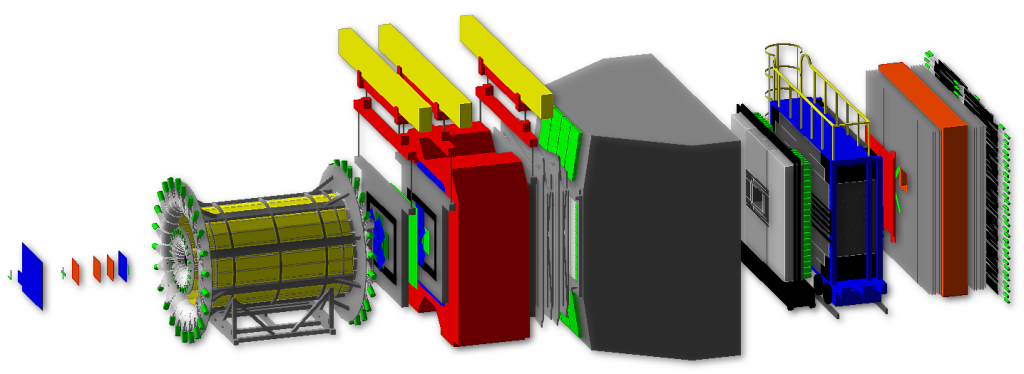
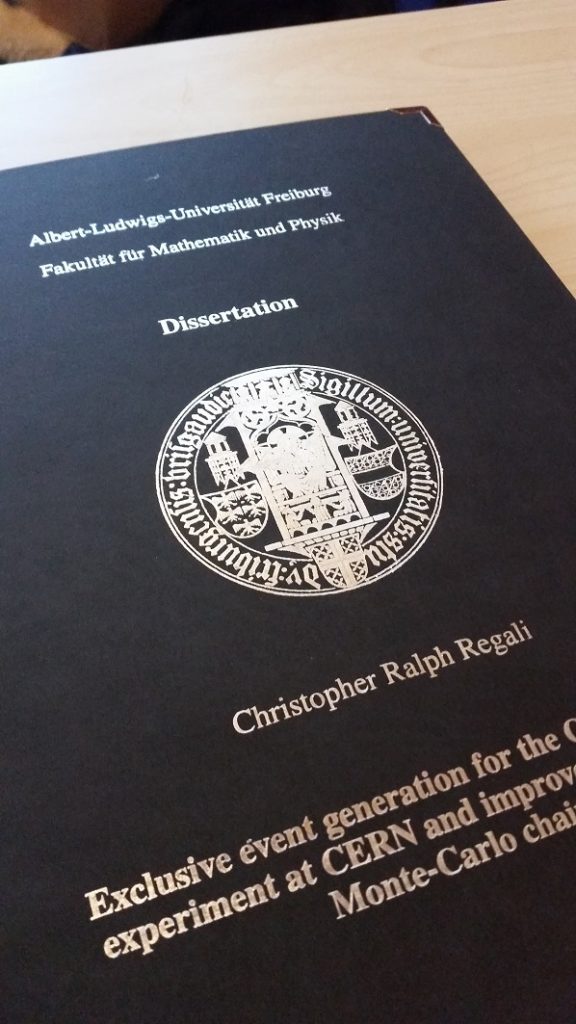
On paper it looks straight: school, Abitur, chemistry and physics in Freiburg, then a PhD in particle physics, splitting time between Freiburg and CERN. My thesis work was event generators and simulation software, mostly in Geant4/C++ with Qt around it.
Somewhere between simulation work and late-night debugging, I realized I loved building software as much as I loved physics. That mix set the tone for everything that came later. It also taught me how to handle complexity without panic: break things down, measure properly, iterate.
Just under two years at Fraunhofer IPM followed, as developer and project lead. I had met my girlfriend during my PhD (now my wife), Freiburg felt right to stay in for a while, and IPM offered exactly the kind of applied work I wanted next. That chapter taught me the difference between clever prototypes and software people rely on in real projects, and it sparked my long-term interest in architecture and maintainability.
On the technical side, I got to work on computer vision projects. I cannot share much, but one has a public demo on YouTube. One project in particular was heavy CUDA/OpenGL interop on NVIDIA GPUs: pushing single executors to the limit while keeping multi-client throughput stable. That pipeline still shapes how I think about throughput vs. latency tradeoffs today.
Two years in, I was ready for the next chapter: long-living product software, and people who'd already been through that journey. Around the same time, my girlfriend and I were ready to relocate. She got a job in Mannheim, and after several interviews I joined Volume Graphics in Heidelberg (later Hexagon).
Hexagon was my first long industry run — and the one where I learned what shipping software for years, not weeks, actually costs. I went deep into a large C++ codebase, did a lot of refactoring work, and introduced BDD-style UI testing with Squish into the quality pipeline. Working closely with devops/techops also pulled me further into the infrastructure side. Many people there shaped how I think about engineering and leadership.
But the biggest shifts happened outside work: I married my girlfriend and became a dad. Paternity can do crazy things with your brain, and stuff that I didn't think about before became more important. I learned that my limits were wider than I thought when purpose is clear. After five years in the same environment, I felt ready for a bigger move.
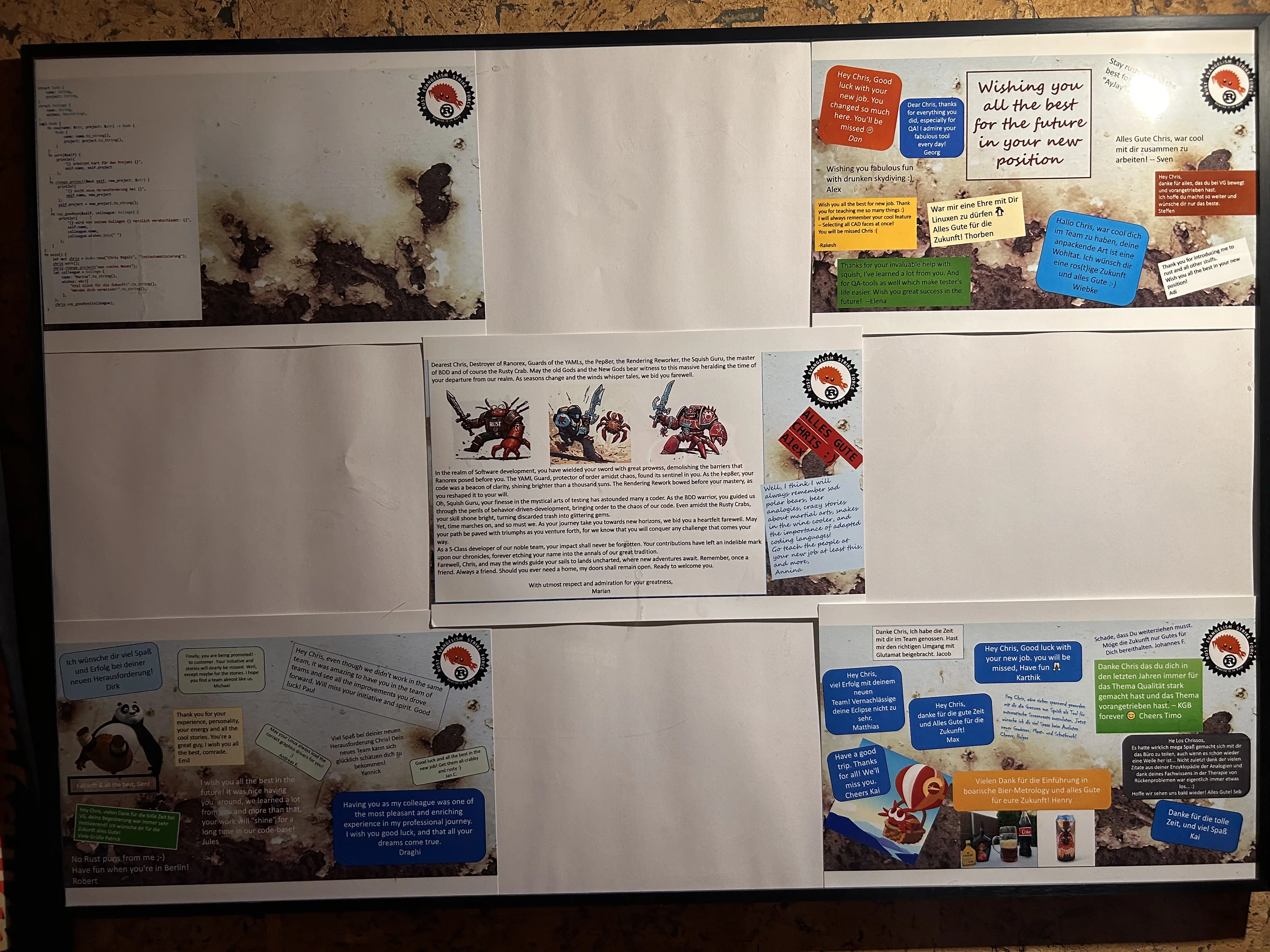
That's when SPREAD.ai came into the picture. What convinced me was not buzzwords but people: strong leadership, sharp engineers, high standards, low ego. For a tech nerd, that is basically catnip. I could go deep technically while growing into larger leadership responsibility: from Rust/TypeScript platform work to late-night discussions about graph storage and lock-free B+ tree ideas.
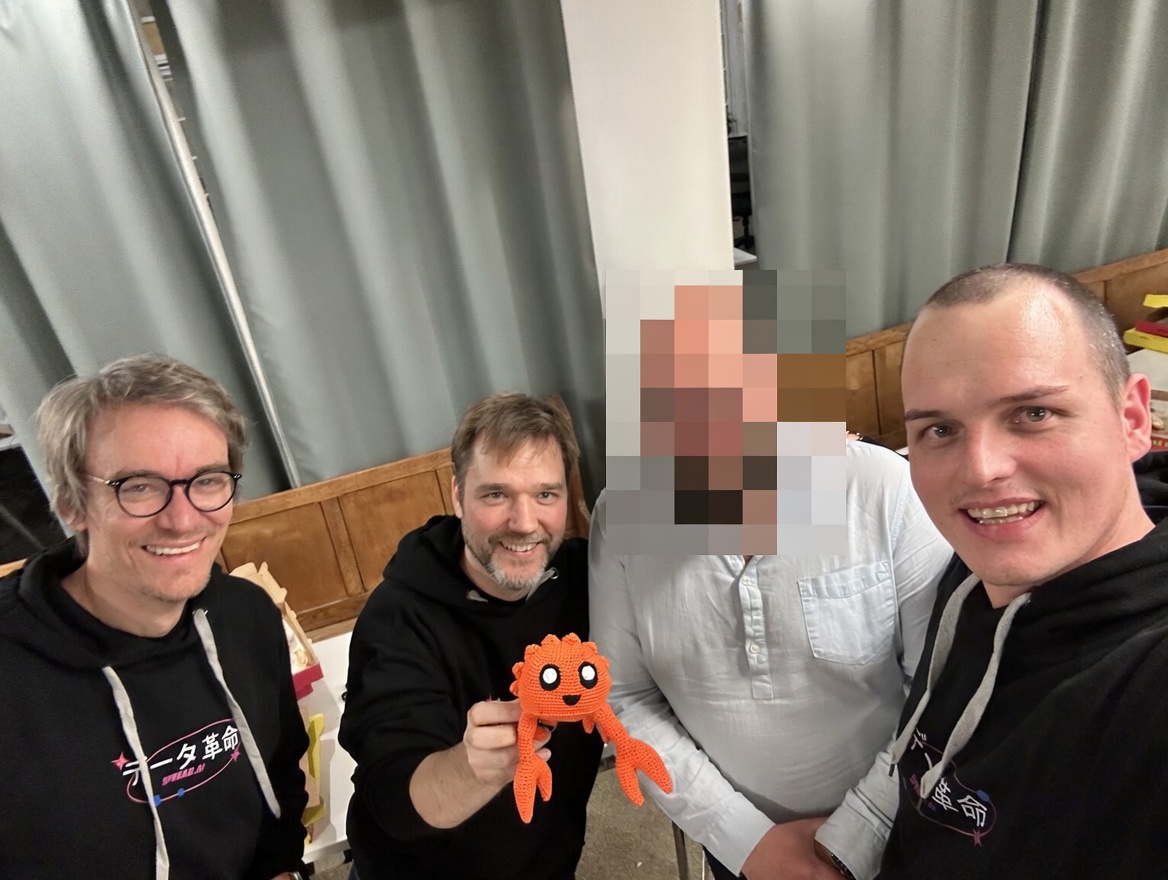
Beginning of 2026, I was offered the Head of Engineering position at SPREAD together with Daniel Wilms, a true graph legend. The scope shift was real: from leading one team of seven on data storage and ingestion — the platform backbone and architecture — to running three teams of around seven each, with their own engineering managers, covering everything that makes up SPREAD's engineering today and the long-term technical vision. Following leaders like Tomas Karlsson and Steinunn Arnardottir is a huge responsibility.
If this story has a theme, it's probably this: hard problems, strong teams, and the kind of tech that doesn't let you bullshit your way through it.
Programming
Programming has been part of my life since I was 12. I started on a DOS box (486) with QBasic and the classic "I'll make games" fantasy. I did not become a game dev, but I built all kinds of nerdy side tools: tax helpers for family in Delphi, then a forum and small CMS in PHP4/PHP5 for classmates.
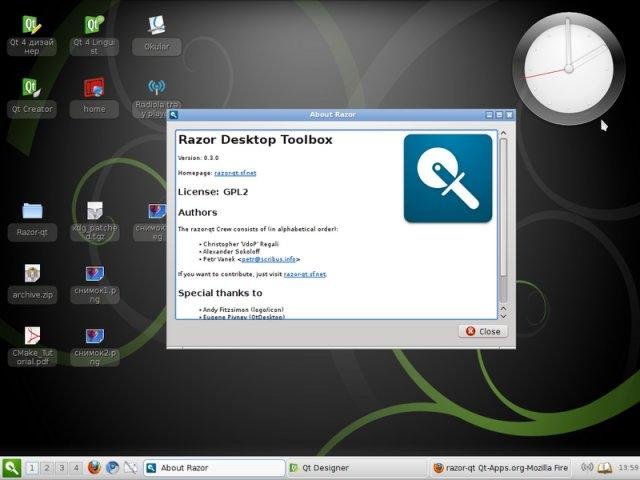
At 17 I moved to Linux and, basically by fate, to C++. For many years C++ plus Python was my default setup. I even built Razor-Qt to keep an old ThinkPad alive without giving up Qt apps. Later, during state exam phase and zero free time, I handed the project over on SourceForge. Watching others continue it was honestly a great feeling.
Over time I ended up in all the fun rabbit holes: performance tuning, SSE, OpenGL/CUDA paths, image processing, build tooling pain, and all the little edge cases that only appear Friday night before release. Then Rust happened and just clicked with how I like to work: explicit, reliable, and fast enough for serious systems work.
These days my baseline is simple: keep architecture understandable, automate boring safety checks, and ship in small reliable steps. Moving this blog to a Rust stack felt like the natural consequence.
Martial Arts
During my Freiburg years I noticed I was getting out of shape. I wanted a sport that would drag me back into discipline, and because I am naturally competitive, martial arts was an easy choice. I started with Wing Chun, but after about a year I switched to Muay Thai because I wanted more pressure testing and competition. That became my second big passion next to programming. All in, I spent about a year and a half in Thailand — training daily, fighting when I could, and mixing in Western boxing on the side. It gave me structure when life got noisy and changed how I deal with stress: less overthinking, more focused execution.
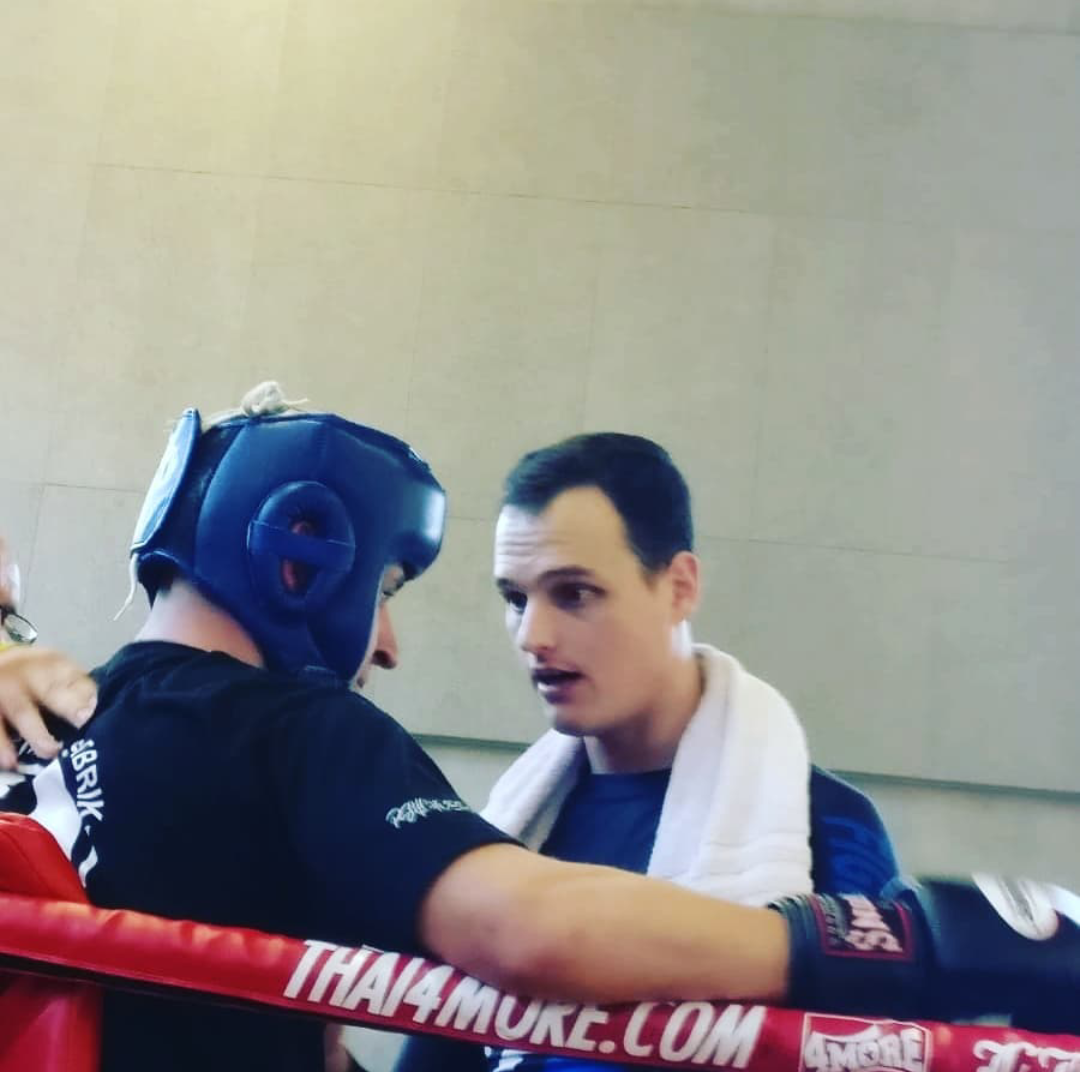
Around ten years into Muay Thai I took the next step and started coaching. After getting a teacher's certificate from MTBD (largest Muay Thai federation in Germany), I taught classes at my home gym in Freiburg. Fun fact: coaching fighting and building software are weirdly similar:
- break down complexity,
- make sure pieces fit at the end,
- good visuals help a lot,
- patterns save energy.
For my own training I later moved more into Brazilian Jiu Jitsu, but that's another story. Coaching made me much better at explaining things clearly, on the mat and in code. If you want a feel for the culture of the sport, watch Best of Siam 2 — it captures the respect and passion pretty well.
Since becoming a father, I see all of this from another angle too. My son is four right now, and I bring him to Judo. Not to turn him into a fighter early, but to prepare him for life in a safe frame: rules, fighting spirit, sportsmanship, competition. For me it's about giving him solid fundamentals early, without drama — the same values, just without the baggage many of us had piled onto us in our youth before we learned them.
My Mantra
A Muay Thai coach once told me a proverb that stuck for good:
Talent is helpful but ultimately peripheral, perseverance is what prevails.
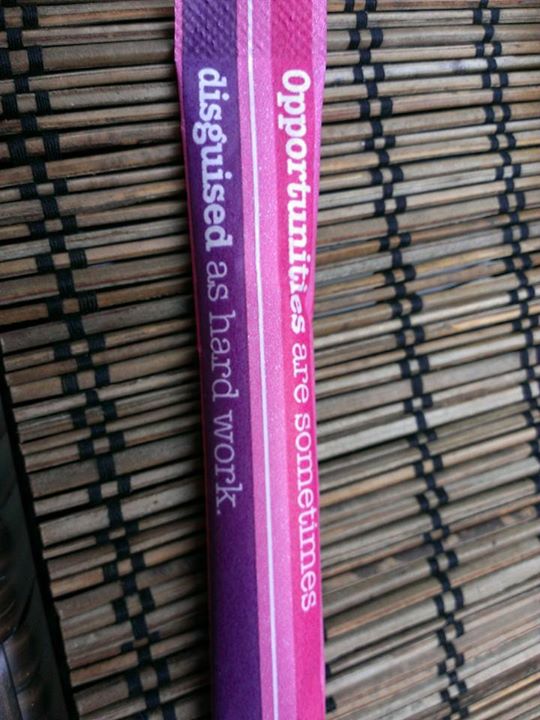
It became my mantra, in work and private life. I keep coming back to it whenever projects, teams, or life get messy. Not because it sounds poetic, but because in the long run it keeps proving true. During a trip through Thailand, Cambodia, Laos, and Vietnam in 2013, I grabbed a sugar packet in a cafe and saw this line. Too good not to take a photo.